


Deciding on which welder is right for you can be tricky. We understand. That’s why we’ve put together this guide on the difference between our most popular welding machines, MIG and TIG, so you can determine exactly which is right for you.
What Is MIG Welding?
MIG (Metal Inert Gas) welding is a type of GMAW (Gas Metal Arc Welding). A MIG welding machine uses a wire electrode that is continuously fed through to join pieces of metal together. A shielding gas then protects the weld area from contamination. This helps to produce a high-quality weld.
MIG welding tends to be used for automotive work, fabrication, construction and home / DIY projects.
A MIG welder is known for its ease of use, speed of use and suitability for welding materials that are thicker (such as mild steel and stainless steel).
What Is TIG Welding?
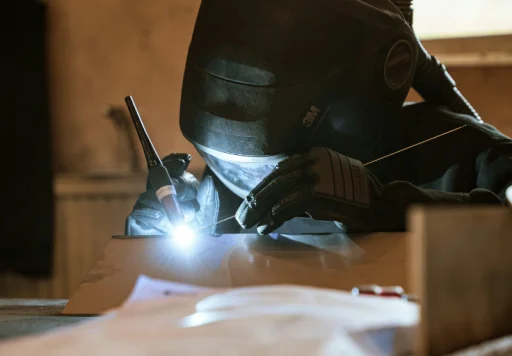
TIG welders, also known as Gas Tungsten Arc Welding (GTAW) Machines, use a tungsten electrode that doesn’t melt or get used up to create the weld. Filler metal can be added separately by hand, and shielding gas (typically 100% argon) is used to protect the weld area.
TIG welders tend to be used within the aerospace and motorsport industries.
A TIG welder is favoured for its precision and suitability for welding thin materials like aluminium and stainless steel.
So now we’ve delved into what each of these welders are, let’s truly explore the differences…
| Feature | MIG Welding | TIG Welding |
|---|---|---|
| Ease of Use | Easier to learn, good for beginners | Requires more practice |
| Speed | Faster welding | Slower due to more precise controls |
| Material Thickness | Ideal for thicker materials | Better for thin materials |
| Weld Quality & Appearance | OK appearance, may produce spatter | No spatter, clean and precise appearance |
| Materials Used | Works well with steel and common metals | Great for aluminum and stainless steel |
| Application Type | Great for general repairs | Best for detailed or structural welds |
What’s Easier To Use?
For beginners, it is known that MIG welders are generally easier to learn. As the machine feeds the wire for you, you can focus on guiding the torch and getting the weld right. They are more forgiving.
On the other hand, TIG welding requires more skill and coordination. To use, you have to control the torch with one hand and the filler rod with the other. It is a more technical process and more ideal for those with more welding experience.
What Supplies Are Required For Both?
MIG Welding Supplies:
- MIG welder
- Welding wire (solid or flux-core)
- Shielding gas (argon/CO₂ mix or pure CO₂)
- Wire feeder (often built into the machine)
- Welding helmet and gloves
TIG Welding Supplies:
- TIG welder (AC/DC for aluminium)
- Tungsten electrode
- Filler rod (depending on the metal)
- Shielding gas (pure argon)
- Foot pedal (for current control)
- TIG torch (air- or water-cooled)
Both MIG and TIG welding have their place in the workshop. If you’re looking for the more do-it-yourself option then MIG welding is the better choice. However, TIG welding offers a more precise, high-quality finish.


