


Welding Procedure & Specification Support: Achieve Certification and Compliance
Ensure Weld Integrity and Regulatory Adherence
For any fabrication business, consistently achieving a high-quality weld and meeting industry standards requires strict control over the joining process. Engweld offers comprehensive technical support and expertise to help you develop, qualify, and document your welding processes to the required codes.
Our team of welding experts and certified partners are here to assist with all your Welding Procedure Specification (WPS) and Procedure Qualification Record (PQR) requirements.
Understanding the Key Documentation Maintaining quality and accountability in welding relies on two core documents:
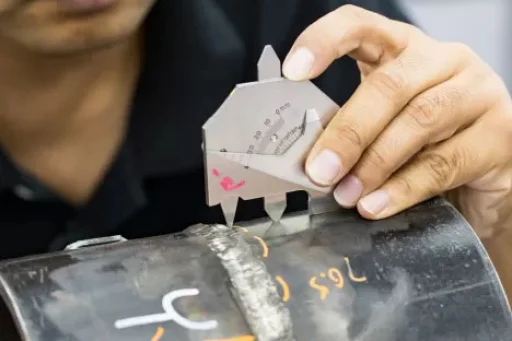
The Welding Procedure Specification (WPS)
The WPS is essentially the 'recipe' or instructional manual for the welder. Its primary purpose is to clearly detail the variables and parameters necessary to produce a joint that meets all specified quality and mechanical property requirements.
This document provides clear, step-by-step guidance for your operators, covering everything needed to execute a successful weld, including:
Process Variables: Welding current, voltage, travel speed, and heat input.
Material Details: Parent materials, thickness, and joint design.
Consumables: Electrode type, size, and shielding gas composition.
Techniques: Number of weld passes, positional welding, and pre/post-weld heat treatments.
The WPS ensures repeatability, meaning that following the documented steps reliably results in a quality-assured product, essential for code compliance.
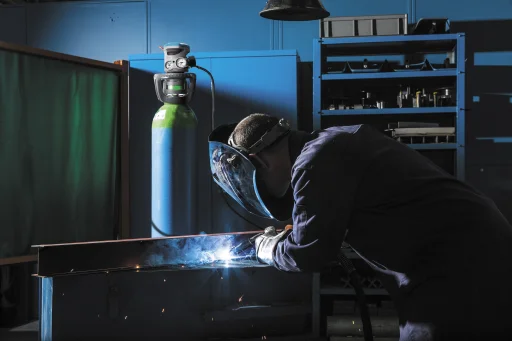
The Procedure Qualification Record (PQR)
The PQR, also known as the Welding Procedure Approval Record (WPAR) under EN ISO standards, is the supporting evidence that proves your WPS is valid. It is the record generated when a test weld is performed according to the preliminary procedure (pWPS) and then subjected to rigorous verification.
The PQR includes the actual data recorded during the test weld, along with results from Non-Destructive Testing (NDT) and subsequent Mechanical Tests (e.g., tensile or bend tests). This document officially qualifies the welding procedure, defining the acceptable range of variables that can be used in production.
The Six Steps to Procedure Development Our team can guide you through the entire lifecycle of qualifying a new welding procedure, ensuring every stage is completed accurately and documented correctly:
Drafting: Create a preliminary welding procedure specification (pWPS) based on the application requirements.
Test Piece Fabrication: A welder follows the pWPS to produce a test coupon under documented supervision.
Quality Verification: The coupon is subjected to laboratory testing, including NDT and destructive mechanical analysis, to verify its properties.
Qualification Record: The results and recorded data are compiled and approved, leading to the creation of the PQR.
Scope Definition: The PQR’s results are used to formally define the approved range of essential variables (e.g., thickness and material range) permitted by the relevant code.
Final Specification: The official WPS is finalized, signed off, and then released for use on production projects.
Relevant Industry Codes and Standards
Our technical support aligns with major international and application-specific welding standards, including:
EN ISO 15614 Series: Core standards for the qualification of welding procedures.
ASME Boiler and Pressure Vessel Code (BPVC) Section IX: Mandatory for fabrication related to pressure vessels.
EN ISO 17660: Specific standards related to welding of reinforcing steel.
Are you ready to connect with our Fabrication excellence team to discuss your current WPS requirements?
We're able to support your welding & fabrication business with a wide range of specialist services including welding machine repair, service & calibration, CP7 & CP47 gas equipment safety checks, welding efficiency analysis through our WEAP program, welding procedures & specifications and NDT testing. We also offer a support scheme to students through welding colleges and educational establishmenets with a bespoke support package.