

Different projects require different methods and tools, in this way, welding different materials requires you to choose the right tools to get your desired results. Working with aluminium is difficult due to its high conductivity and low melting point, while the oxidised film on the aluminium surface has a different melting point to the aluminium itself and is therefore tricky to work with for even experienced welders.
Aluminium is suitable for both MIG and TIG welding, the difference between the most suitable method comes from the thickness of the material, for thicker welding MIG is recommended as it can do the job faster, whereas for thinner aluminium TIG is more suitable. In this article, we will be looking at Aluminium TIG welding.
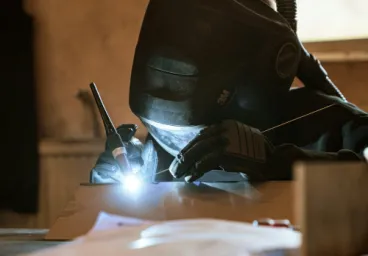
In most cases, TIG welding is used when working with aluminium. Due to the increased control you have when using this method, you have the ability to prevent the aluminium from overheating.
The selection of a filler rod is a critical aspect of TIG welding, the use of both hands affords the welder excellent control, and by choosing a rod that is more forgiving in terms of the weld parameters you are able to have better control over the weld pool, which results in a cleaner and better-finished weld. As you do not use mechanical feeding for TIG, otherwise known as GTAW welding, you eliminate the feedability issues that are often associated with welding methods that use automated wire feeders.
TIG welding, due to the need to use two hands in order to operate both the welding torch and the filler material simultaneously, forces you to take more time and therefore is a better option where quality and attention to detail are important. As you feed the filler yourself, you also get work that is spatter free, which results in a cleaner finish.
The correct TIG welding machine
Tig welders that are suitable for aluminium typically have the following characteristics:
- AC-powered, the alternative current makes it more suitable for dealing with the oxide film on the aluminium surface.
- The output power range is up to 500A on the larger TIG machines.
- The welding should feature a low amperage, meaning the arc stability must not exceed 10 amperes.
- Its duty cycle should ideally be between 50% – 80%, although this may differ.
For smaller and more precise welds and projects involving aluminium, TIG welding is better suited due to the two-handed operation. This forces the welder to be more methodical and work at a slower pace, which allows greater care to be taken, essential when working with thin aluminium. The method also yields a cleaner and smoother finish as it should be defect-free whilst ensuring a reliable joint is made. However, this more time-consuming approach, coupled with the increased cost of the materials and equipment does make this a more costly approach to aluminium welding.
There are major differences between MIG and TIG welding, especially when working with aluminium. Each approach has its drawbacks and advantages.
TIG welding would be better suited for your aluminium welding work if:
- Your welding needs to be aesthetically pleasing and offer a beautiful finish, this is achieved through identical weld beads.
- Great attention to detail is required.
- Your work must be spatter free, which results in a cleaner finish.
- Your work area is extremely clean.
- The projects are small in nature.
- The weld does not involve cast iron.
- You wish to have more control over your weld.
- Stronger welds are needed.
- Less maintenance is needed, as with MIG welding, there is no sanding or cleaning required between jobs.
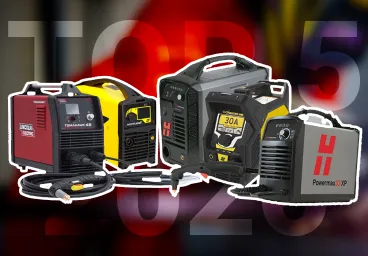
If you are looking for the best tig welding machines for your next aluminim project, we've ranked them in our 2025 guide. And if you are still hesitating between different models we've provided a guide to choose your nest tig welder.
The Gases Used
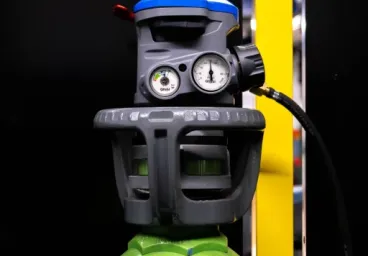
During TIG welding, inert gases are used in order to protect the weld pool from contaminants such as moisture, which have detrimental impacts on the integrity of the weld. Typically, when working with aluminium, Argon gas is used.
As an inert, noble gas, it is colourless, odourless, and most importantly from a welders perspective, it is a non-chemically reactive gas. This means that the melted aluminium will not react with the shielding gas, ensuring that the weld remains pure.
Although it should be noted that Argon is frequently combined with Helium, Hydrogen and Carbon Dioxide, as a mixture can provide certain properties that Argon alone cannot. For example, by combining Argon with Helium, the welder is able to achieve deeper penetration, whilst also ensuring that the weld pool remains fluid. The addition of Hydrogen will give a similar effect to that achieved by using Helium, but much stronger.
The key is to use non-oxidising gases, as these will destroy the tungsten electrode.
TIG welding is more appropriate for the more experienced welders and those that require neater welds.
Safety Considerations for Aluminium TIG Welding
TIG welding aluminium, while precise, also presents safety hazards. The intense UV radiation from the arc requires a high-quality welding helmet. Fumes produced during the process can be hazardous, so adequate ventilation is essential.
Wear appropriate PPE, including flame-resistant clothing and gloves. Be especially cautious of electrical hazards associated with TIG welding equipment. Ensure your equipment is properly grounded and maintained.
The high frequency arc that is used in AC TIG welding, can interfere with pacemakers and other medical devices. If you have a pacemaker, consult your doctor before welding.